New strategy to fight the tough Breast Cancer

Scientists at the University of Calcutta and the Saroj Gupta Cancer Care and Research Institute (SGCC & RI), Kolkata propose a novel strategy to fight the aggressive triple negative breast cancer using combinatorial therapy of their new techniques along with conventional drugs.


Dr. Chatterji and her team in their study compared normal and breast cancer stem cells (brCSCs) to identify new mechanisms that make these brCSCs more resistant to drugs. Stem cells are the cells that have the capability to form into any other type of cell or divide into more stem cells. The brCSCs are resistant to drugs, live longer and make more cancer cells once the chemotherapy regimen is finished and thus re-form the tumor.


Astonishingly this population of brCSCs are seen to increase significantly when chemotherapy is given to patients, thereby increasing the risk of tumor recurrence”, as observed by Pritha Mukherjee, a graduate student in the lab. and lead author of the publication. This is primarily because of persistence and impetuous proliferation of the cancer stem cells which do not get eliminated by conventional chemotherapy because of elevated expression of drug efflux pumps”- pumps that throw out the drugs from the cell.


The researchers identified molecules that played key roles in chemo resistance and migration as SOX2, ABCG2, and TWIST1. They showed that on shutting down SOX2 which further affects TWIST1 and treating with the conventional anti-cancer drug, paclitaxel (Pax) resulted in the restricted migration of the cells. Remarkably, even after removal of the drug, Pax, the cells did not migrate. These results were published in the August 2017 issue of Scientific Reports.


The authors suggest, “obliterating SOX2 expression specifically in brCSCs before or during chemotherapy is a possible approach to eliminate the brCSC population within a tumor, with a promise to prevent post-chemotherapy recurrences in future”.


“A treatment strategy which ensures eradication of persistent drug resistant cells would serve as a complete therapy”, says Dr. Arnab Gupta, Director, SGCC & RI.


Breast cancer is the most commonly diagnosed cancer in the world. It threatens 1 in every 28 urban women in India. Triple negative breast cancer (TNBC) is a subset of breast cancer which is resistant to most drugs and tends to recur once the drugs are removed. In addition, this cancer is particularly aggressive & spreads easily.


“Unlike patients who may respond to hormone or trastuzumab administration, TNBC patients are generally given intense adjuvant cycles of chemotherapy in addition to radiation where indicated. However, the risk of disease recurrence still persists”, Dr. Gupta told India Science Wire.


Prof. Urmi Chatterji, University of Calcutta says, “The clinical part of our study has figured out that TNBC evolves to be of prominent occurrence, especially in patients from West Bengal and Bangladesh. Despite recent advances in the treatment of triple negative breast tumors, tumor metastasis and the incidence of distant relapse remains high, necessitating novel therapies to surmount the existing paradigm”.


Approaches should be taken to overcome the resistance phenomenon of the cancer stem cells, chiefly by making them sensitive to drugs to which they were resistant. Therefore, designing new methods which would target SOX2 would in effect render the resistant population sensitive to anti-cancer drugs. The outcome of this basic research may in future be translated into a clinical methodology for controlling tumor recurrence”, suggests Prof. Dhrubajyoti Chattopadhyay, Vice Chancellor, Amity University, an author of the publication.


Further research by Dr. Sreemanti Das, a post-doc in the laboratory, has identified nanoformulations of anti-cancer drugs which have the potential to reduce SOX2 expression and effectively obliterate the cancer stem cell population, not only in cells in culture but also in tumors induced in mice, and thereby has immense potential in being developed as a promising drug in future”, confirmed Prof. Chatterji.


Although there is a long road ahead consisting of studies and clinical trials which need to be performed before such a treatment option is available, the current study holds promise. If the study manages to lead to a treatment protocol, cancer survivors will no longer have to live in the fear of their cancer coming back.


The research team led by Dr. Urmi Chatterji, included of Pritha Mukherjee, Arnab Gupta, and Dhrubajyoti Chattopadhyay. The study was funded by Department of Biotechnology, Government of India.
Drugs for prevention of Lymphatic Filariasis are safe: Indian study

Safety of medicines administered on an ongoing, long-term basis as a preventive measure is always a concern. A team of scientists in India with a collaborator from Switzerland has evaluated the efficacy, tolerability, and safety of two such drugs- albendazole (ABZ) and diethylcarbamazine (DEC) that are used for mass drug administration (MDA) for populations susceptible to Lymphatic Filariasis (LF) caused by roundworms.

The team led by Dr. Kshirsagar of Seth GS Medical College and KEM Hospital, Mumbai compared the efficacy and safety of a 3-year treatment program of a single annual dose of DEC + ABZ with a single annual dose of DEC in subjects from Kurzadi and Selukate villages, Wardha, Maharashtra, India.373

In 2000, the Global Program to Eliminate LF (GPELF) was launched to limit disease transmission by reducing microfilaria (Mf or immature larvae) using drugs. Mf or immature larvae are responsible for transmission while the macrofilaria or the adult worm results in disease.

This group studied the safety and micro (Mf) and macro filarial action of single-dose diethylcarbamazine (DEC) and DEC + albendazole (ABZ) in Wardha in the year 2000 and found no difference between the two prevention protocols. They further continued this study with annual rounds of DEC and DEC + ABZ to assess the efficacy and safety of these drugs. Using standard assays, they confirmed a decline in Mf positivity in the subject population. The study also showed ABZ + DEC and DEC drugs as being well tolerated although supplementation of DEC with ABZ did not show any advantage over only DEC.

Dr. Kshirsagar and co-workers suggest,

“this study is important for monitoring and evaluation of elimination program since efforts are being made to develop macrofilaricidal drug by Drugs for Neglected Diseases initiative (DNDi).”

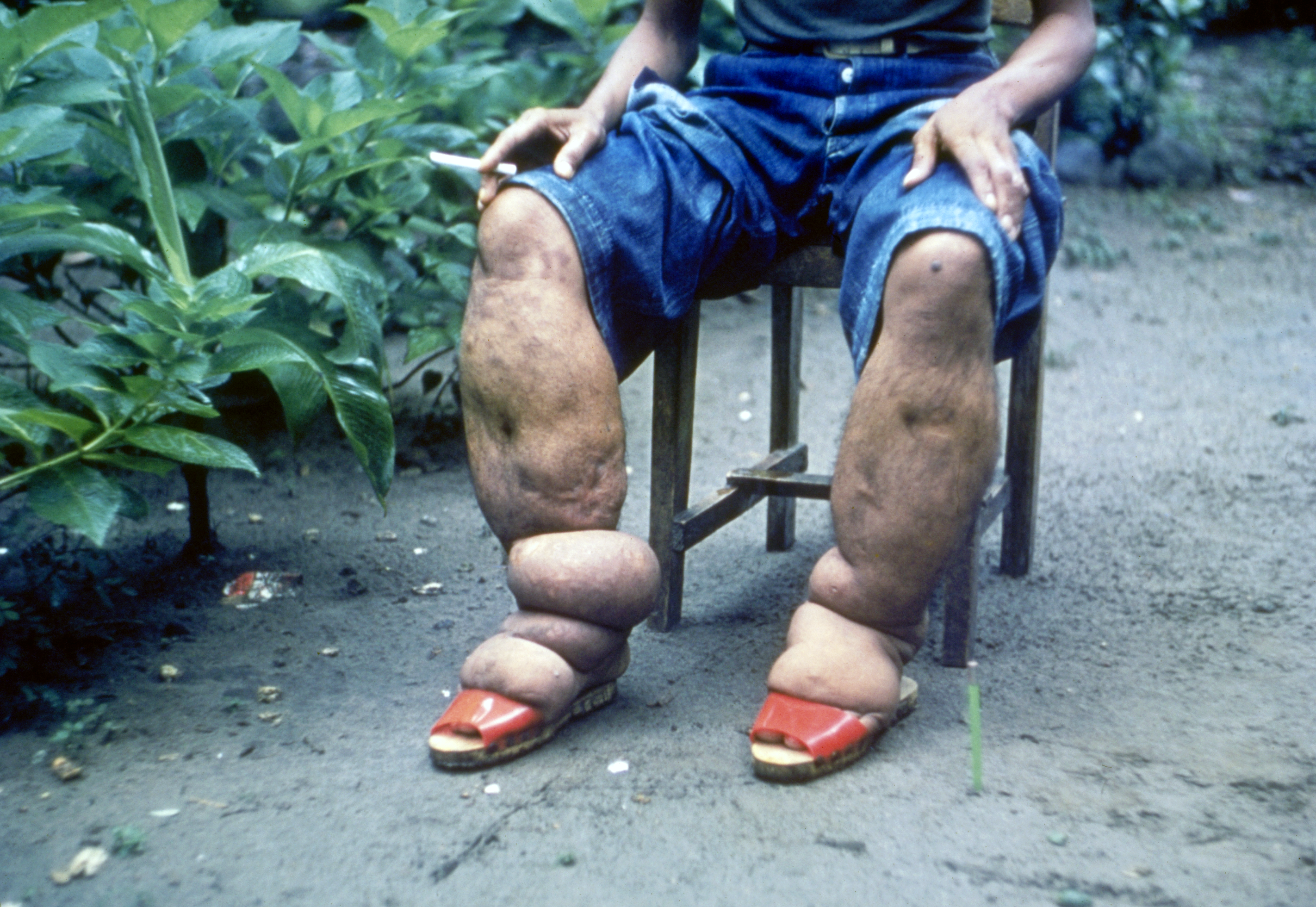
Mosquitoes in developing countries play havoc with public health, transmitting disease-causing organisms. LF commonly known as Elephantiasis is another disease spread by mosquitoes carrying the infectious roundworm and it affects millions of people across 52 countries. Along with vector control measures, World Health Organization (WHO) applies another strategy to combat these diseases which is preventive chemotherapy or mass drug administration (MDA) to vulnerable populations.

“Authors have performed a well thought of study that was carefully designed after applying several inclusion/exclusion criteria as well as ethical implications. The interpretation with regards to the beneficial effects of ABZ, DEC when given alone compared to when given in combination remains inconclusive and may require proof of principal by carrying out similar studies on larger cohort size. Overall, study finds interest in the context of disease burden and its prevention in the Indian scenario”,

Dr. Naresh Arora, Project Scientist, DBT-CoE, Jamia Hamdard University. He is not connected with the study.

The WHO fact sheet, October 2017 states that since the launch of GPEFL (2000), more than 6 billion treatments have been provided to stop the spread of Lymphatic Filariasis. With the effective application of WHO’s strategy of MDA, about 500 million people no longer require preventive chemotherapy.

The team comprised of NA Kshirsagar, NJ Gogtay, VS Kadam, PA Thakur, A Gupta, and DD Rajgor of Seth GS Medical College and KEM Hospital, Mumbai, BS Garg, PR Deshmukh, and NS Ingole from Mahatma Gandhi Institute of Medical Sciences, Wardha and JK Lazdins-Helds, World Health Organization (WHO), Special Program for Research and Training in Tropical Diseases, Switzerland. This study was reported in Parasitology Research Journal, August 2017 issue and the work was carried out with financial support from the UNDP/World Bank/WHO Special Program for Research and Training in Tropical Diseases (TDR).

Effect of Climate on Dengue disease burden in India

India with its vast and diverse geography and landscape, experiences mainly four seasons-winter, summer or pre-monsoon, monsoon and post-monsoon with six distinct climatic zones.

Scientists, in a new study, have evaluated the relationship of climatic factors in the spread of Dengue in different parts of India and suggest the fine tuning of Climate based disease forecast models for the distinct climatic zones.

These mosquito-borne disease cases have been reported since the early 1960s, but there has been a tremendous increase in their number in the last 15 years. Researchers at CSIR-IICT, Hyderabad, NIPER, Assam in close collaboration with scientists at the University of Liverpool, United Kingdom analyzed the effect of temperature and precipitation on the dengue disease burden in various climatic zones of the country, ranging from dengue endemic regions in North (Punjab and Haryana) to West (Rajasthan and Gujarat) and to the South (Kerala).

They studied the changes in extrinsic incubation period (EIP) of the dengue virus by taking into account the daily and monthly mean temperatures in these areas.

The extrinsic incubation period (EIP) is the time taken for incubation of the virus in the mosquito. During this period, after the mosquito draws virus rich blood meal, the virus escapes the gut and passes through the mosquito’s body and reaches the salivary glands. Once this happens, the mosquito is infectious and capable of transmitting the virus to another human host.

The authors suggest that climatic conditions play an important role in this phenomenon. Their findings show that lower temperatures (~17–18 °C) result in longer EIPs thereby leading to decreased virus transmission. With increasing climatic temperatures, feeding increases because of enhanced metabolism of the mosquito, leading to shorter EIPs. Even a 5 day decrease in the incubation period can lead to the transmission rate of dengue increasing by three times, and with an increase i

n temperature from 17 to 30 °C, dengue transmission increases fourfold. However, a further increase in temperature beyond 35 °C, would be detrimental to the mosquito survival.

They also observed that except for Gujarat which comprises of arid regions, there was a strong correlation between rainfall and dengue disease burden. They propose an increase in breeding grounds for mosquitoes as a major reason for this finding.

The study found that Kerala being warm (temperature range 23.5-30 °C) and wet and with short EIPs (9-14 days) experiences the highest number of dengue cases. In their analysis, they observed that EIP is the shortest during the monsoon season in most states and therefore there is an enhanced risk of dengue during this time.

The group led by Dr. Mutheneni at CSIR-IICT suggests that it is very important to take into account the dynamic EIP estimates in different regions in assessing disease burden.

“This climate based dengue forecasting model helps the health authorities to assess the disease intensity in a geographic region, based on that one can plan the disease control operations well in advance and optimize the use of resources meticulously”’ suggests Dr. Srinivasa Rao Mutheneni, lead author of the study.

With changes in temperature affecting the extrinsic incubation period of the virus, future changes in the climate might have a substantial effect on dengue and other vector-borne disease burden in India.

On asked about the applicability of such methods in better disease control, Dr. SR Mutheneni tells India Science Wire,

“Though such methods are in vogue for disease control operations, we are still in the initial stages of implementation of such strategic control methods”.

The study was published in Emerging Microbes & Infections, August 2017 issue.

Suggested screening of celiac disease markers in children suffering from type 1 diabetes mellitus

Celiac disease is an autoimmune disorder, a condition in which the body’s defense mechanisms start attacking its own cells withceliac disease blog pic its fighting machines, called antibodies. The patient becomes intolerant to gluten, a group of proteins found in wheat, barley, rye and many other foodgrains. Thus he/she must maintain a gluten-free diet (GFD) for life to prevent complications.


Another long-term disorder in children is type 1 diabetes mellitus (T1DM). The body produces an insufficient amount of insulin which leads to high blood glucose levels and other manifestations at a later stage such as the involvement of kidneys, eyes, genitals, and other organs.

Studies have shown coexistence of T1DM and CD in patients because of similar genetic causation for both diseases. Data shows the prevalence of CD in the general population to be about 1% whereas, in patients suffering from T1DM, it ranges between 5-7%. There is variability in prevalence and coexistence of the two diseases depending upon geographical and genetic predisposition. In India, the north displays comparatively higher prevalence as compared to the south.

Dr. Anju Seth and coworkers at the Department of Pediatrics, Lady Hardinge Medical College, New Delhi took a retrospective look at samples collected during the period – January 2006 to May 2014 and assessed the co-existence of T1DM and CD in children.

They reviewed the records of 126 children and adolescents (62 boys and 64 girls) with T1DM, mean age of 8.2±4 yr. (boys) and 8.1±3.8 yr. (girls). Using biochemical assays like antibody detection and biopsies, they found that 13.5% children with T1DM were suffering from CD as well.

Another observation is the short stature of children with T1DM and CD and coexisting thyroiditis, an autoimmune disorder affecting the thyroid gland that produces hormones regulating growth and development.

In the majority of the cases worldwide, diagnosis of T1DM precedes CD, though the order may be reversed in some. The researchers suggest that it is very important to screen for CD in the early years of detection of T1DM in patients. Alarming symptoms could be sudden changes in blood glucose levels and reduced growth. Failure to do so would increase the risk of T1DM patients to growth retardation, infertility, and gastrointestinal lymphoma (cancer of the gut). Further, they speculate that T1DM patients with undetected CD having continuous exposure to gluten-containing food have a higher chance of developing other autoimmune diseases. Thus, it is very important to test for CD in patients suffering from T1DM to prevent long-term complications.

The authors have shown a higher prevalence of CD in children suffering from T1DM. Since the study was limited by retrospective analysis and variable follow-up of the patients, a more vigorous study plan would further confirm the findings.

The article was published in Indian Journal of Medical Research, January 2017 issue. The team comprised of Preeti Singh, Anju Seth, Praveen Kumar and Sushma Sajjan at the Department of Pediatrics, Lady Hardinge Medical College, Kalawati Saran Children’s Hospital, New Delhi, India.